
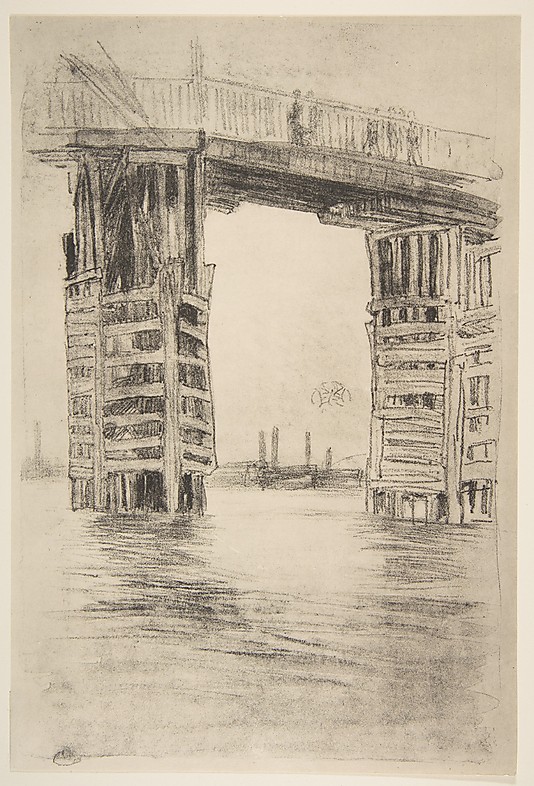
"Protest by artistic, original thinkers can also be subtle. When the painter James McNeill Whistler was a cadet at West Point, he was assigned to draw a bridge in an engineering class. His inclusion of two boys fishing from the bridge displeased the instructor, who ordered him to draw it again without the young fishermen. Whistler did as he was instructed, but unwilling to completely stifle his artistry, he drew the boys fishing from the riverbank. Told he would still not receive a passing grade, Whistler handed in the drawing one more time, without the boys in the picture. But on the riverbank, as monuments to the death of creativity, stood two little headstones."
-susquehanna currents
this is one of my favorite stories of all time.
i remember hearing it on the parade ground at west point during a warm july night lit by unthinkably brilliant fireworks. it was 1967 or so, and there was that great expanse of sky and lawn, and the towering stone buildings, and the hudson rolling along nearby. everything combined to make some sort supernatural event that can never be equaled in memory. there was a timelessness that only children recognize as being almost divine: the stars, the warmth, the sound of the river, the bursts of light overhead, the safety of family sitting all together. time stopped. on that wool blanket, watching the night, we were with one another in history.
listening to the story of whistler's bridge in a sort of rapture (someone read over booming loudspeakers), i recall thinking that that was just the sort of artist one should be. but the story! it took me years to reconcile myself to the fact that the children died. the breathtaking and utterly tragic tale, illustrated in three genius-concise frames, seemed then to be the essence of storytelling. it still does.
[addendum: glancing at cadet whistler's oddly carefree west point career, those headstones might've also been a premonition of the demise of his somewhat indulged tenure in the long gray line. but this is only hearsay on my part.]

No comments:
Post a Comment